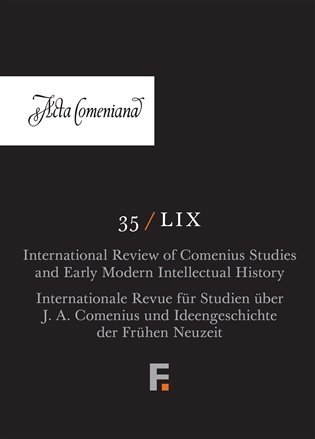
Acta Comeniana 35 / LIX


Svazek přináší pět studií, jednu recenzní studii a recenze
vztažené k tematice intelektuálních dějin raného novověku. L.
Řezníková (Praha) se věnuje funkci metafor v Komenského historické
teorii a naraci. J. Malura (Praha/Ostrava) zkoumá dějepisné reflexe
stavovského povstání a české války z…
V angličtině. Ke studiím jsou připojeny anglické abstrakty a česká
resumé.
The volume contains five studies, one review article and reviews
related to the intellectual history of the early modern period. L.
Řezníková (Prague) focuses on the function of metaphors in
Comenius' historical theory and narration. J. Malura
(Prague/Ostrava) examines historiographic accounts of the Estates
Uprising and the Bohemian War from the point of view of the
narrative representations of the social crisis. R. Újlaki
(Budapest) analyses the religious identity of the Transylvanian
Sabbatarians at the turn of the 16th and 17th centuries in terms of
their relationship to Passover/Easter. Z. Žalud and M. Králová
(Prague) discuss the phenomenon of the "Lutheran Lourdes" in
Hornhausen, Saxony, and append to their study an edition of a
letter by the physician Jan Marcus Marci. N. Mout (Leiden) analyses
the scholarly commemorations and celebrations of Comenius in the
Netherlands in 1892, 1970 and 1992. P. Pavlas's (Prague) review
article deals with recent research on Ramism and Cartesianism,
especially Howard Hotson's new book.
In English. The studies are accompanied by English abstracts and
Czech summaries.